
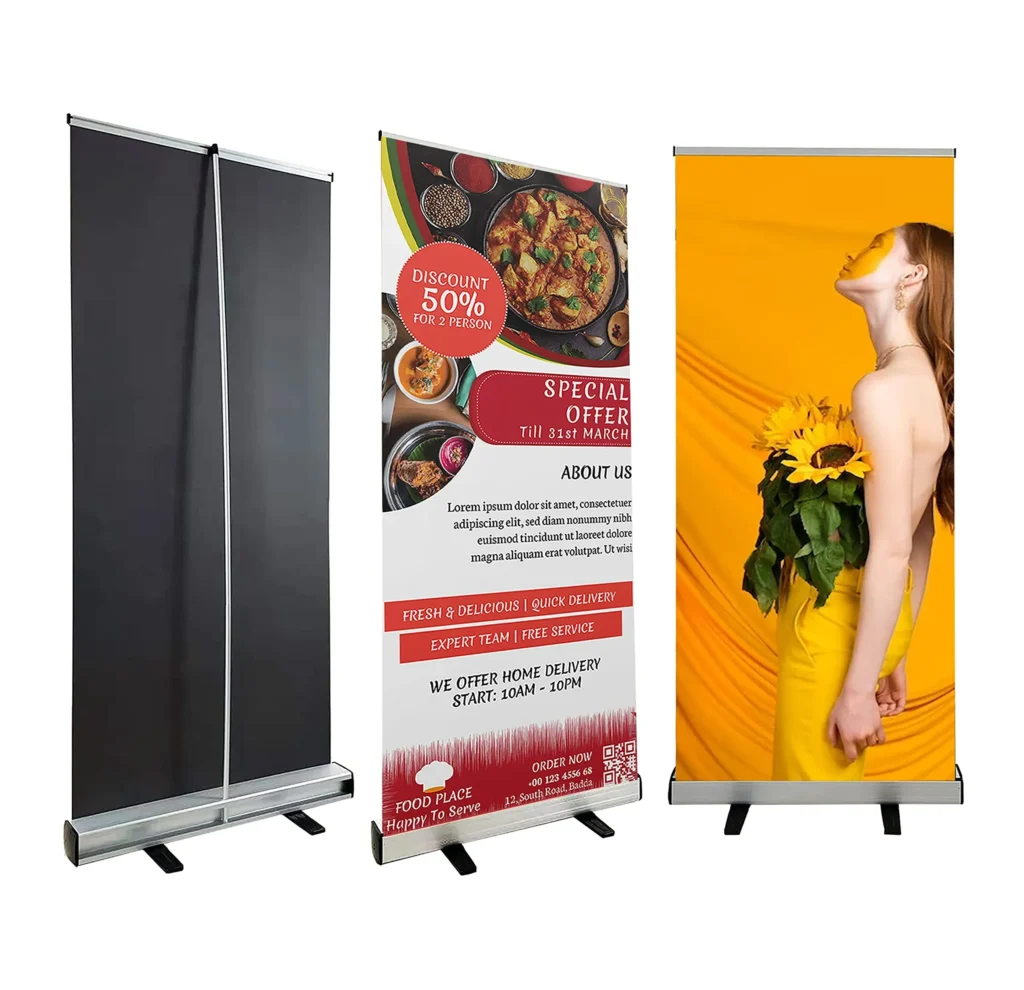
Custom Roll up Banners have become a versatile centerpiece for brands at trade shows, exhibitions, conferences, and live events. They offer fast, portable setup and a cost-effective way to deliver a bold, at-a-glance message. To amplify reach, designers often pair these displays with complementary items like custom roll up banner stands and portable banner displays. Choosing the right material and size helps ensure legibility from across the booth and reduces glare from venue lighting. This introductory guide explores roll up banner printing, printing quality, layout, and how these banners fit into broader trade show banners and event signage strategies.
Beyond their name, these displays are known by alternative terms such as retractable displays, pull-up banners, banner stand systems, and portable signage, all designed for quick setup and easy transport. From an SEO perspective, this category is commonly discussed using related phrases that reflect its practical uses and versatile formats. These visuals serve the same purpose of delivering concise messages, guiding attendees, and driving engagement at conferences and trade shows. Choosing between single- or double-sided options, different materials, and carry cases should align with audience reach, booth layout, and budget to maximize impact.
Custom Roll up Banners: Choosing the Right Size and Layout for Trade Show Success
To maximize visibility, start by matching banner size to your booth footprint. Standard widths such as 33 inches and 36 inches provide a balance between presence and sightlines, while heights around 78 to 85 inches keep the message readable from several steps away. For most exhibits, this translates to clear readability at arm’s length and from across an aisle, avoiding visual clutter that hides your core message. When planning your trade show banners, think about how the display complements other signage rather than competing with it.
Consider single- or double-sided configurations to extend visibility in open booths and high-traffic aisles. A taller banner or a multi-banner setup can emphasize your logo from distance and still present product details up close. Align the layout with your booth design, ensuring sightlines from multiple angles are unobstructed and that the CTA remains prominent. In practice, the size and layout choices influence attendee engagement and eventual ROI.
Durable Materials and Portability for Reusable Roll Up Banner Displays
Durability starts with the frame. Lightweight aluminum or composite stands support graphic panels without adding unnecessary weight, making it easy to transport between events. For resilience, choose reinforced hardware and a graphic panel that resists creasing and edge curling after repeated storage. Materials like vinyl offer rugged cleanliness, while fabric banners provide a premium look with reduced glare. If you use custom roll up banner stands, ensure the hardware is robust enough for frequent setup and takedown.
Portability is also about practical packaging. Look for protective carrying cases, simple setup mechanisms, and tolerance for frequent packing and unpacking. For many exhibitors, portable banner displays streamline logistics, lower labor costs at the show, and reduce the risk of damage during transit. A well-chosen bundle of banner stands and cases can save time and money across multiple events.
Design That Commands Attention: Visual Hierarchy for Event Signage
Design choices matter as much as the copy. A strong hierarchy with a crisp headline, a supporting subheading, and a single clear message improves legibility from a distance. Use high-contrast colors and large, legible typography to minimize eye strain for attendees strolling the trade floor. Ensure the content aligns with event signage standards and your broader brand guidelines.
Limit the amount of text and rely on visuals and a concise CTA to drive engagement. Include your logo, key benefits, and a scannable CTA such as a QR code or booth number that guides visitors to more information. A cohesive design approach helps your banner work in tandem with other trade show banners and signage, reinforcing your brand at every touchpoint.
Printing and Production: From Artwork to Premium Roll Up Banner Printing
Production starts with clean artwork prepared for print. Provide vector logos and icons with bleed and safe margins to prevent essential elements from being cropped. A typical bleed of 0.125 inches (3 mm) ensures you avoid edge cropping as the banner is trimmed to final dimensions. Sharing print-ready files early reduces the chance of color shifts or misregistration.
Choose the right printing method and substrate for the venue. UV-curable inks deliver durable, weather-resistant results, while dye-sublimation on fabric offers a crease-free, premium finish with reduced glare. If color accuracy matters, provide Pantone values and request a proof before final production to ensure the roll up banner printing matches your expectations.
Setup, Placement, and On-Site Best Practices for Trade Show Banners
On-site setup should be fast and predictable. Unpack, inspect for wrinkles, and ensure the graphic is clean before extending the mechanism. Place the banner at eye level near the booth entrance to capture attention from multiple routes and guide attendees toward your main CTA. Pair with other elements like product displays or digital screens to create a cohesive experience for event signage and branding.
During the show, monitor lighting and background visuals to minimize reflections and maximize readability. For multi-banner displays, establish a logical flow that leads visitors from entry to CTA points, and keep aisle traffic unobstructed. The choice of placement and sequencing can influence dwell time, booth traffic, and ultimately the effectiveness of your trade show banners strategy.
Maintenance, Storage, and Longevity for Portable Banner Displays
Long-term care starts with proper storage. After the show, store banners in their cases in a cool, dry place to extend life and prevent warping. Avoid bending the graphic component beyond recommended tolerances and protect hardware from impact during transit.
Regular maintenance includes inspecting screws, replacing worn parts, and cleaning panels with a soft cloth to keep colors vibrant. Plan for future events by keeping a library of adaptable banner designs that can be updated with new dates or products, maximizing the ROI of portable banner displays over time. A thoughtful maintenance routine helps ensure your event signage remains effective across many shows.
Frequently Asked Questions
What are Custom Roll up Banners and why are they popular for events like trade shows and conferences?
Custom Roll up Banners are retractable displays with a graphic panel mounted on a lightweight stand. They’re popular for events because they offer fast setup, easy transport, and cost-effective branding, making them ideal as trade show banners and event signage. They also work well as portable banner displays to attract attendees at a distance.
How do I choose the right size and configuration for Custom Roll up Banners at my booth?
Choosing the right size and configuration for Custom Roll up Banners depends on booth space, sightlines, and viewing distance. Common widths are 33 inches or 36 inches, with heights around 78–85 inches. Options include single- or double-sided prints, taller formats, or multi-banner setups using custom roll up banner stands or portable banner displays.
What materials should I look for in Custom Roll up Banner stands to ensure durability and easy transport?
Look for durable materials and a sturdy frame when evaluating Custom Roll up Banner stands. Graphic panels are typically vinyl or fabric, while the frames are lightweight aluminum or composites. Include a protective carrying case to support easy transport and reuse across events, ideal for portable banner displays.
How can I design an effective Custom Roll up Banner for maximum impact at a trade show?
Designing an effective Custom Roll up Banner starts with a bold headline and high-resolution graphics. Keep text minimal for legibility at distance, use high-contrast colors, and include a clear CTA such as a QR code or URL. Align with your trade show banners and event signage strategy to ensure consistent branding.
What should I know about printing and production for Custom Roll up Banners?
For printing and production of Custom Roll up Banners, provide print-ready files with bleed (0.125 inches / 3 mm) and vector logos. Choose a print method and substrate that suits the venue—roll up banner printing with UV-curable inks for durability, or dye-sublimation on fabric for a premium, glare-free finish. Consider color management and request a proof to ensure color accuracy.
How do I set up and optimize Custom Roll up Banners during an event to maximize ROI?
At the event, set up your Custom Roll up Banner quickly: unpack, extend, and position at eye level near your CTA. Pair it with other booth elements and use lighting to minimize glare. Test the banner in the venue beforehand to optimize sightlines and measure impact on leads and engagement, informing your ROI for portable banner displays.
| Topic | Key Points | Notes |
|---|---|---|
| What is a Custom Roll up Banner | Retractable display with a graphic panel on a lightweight stand; portable and easy to transport; quick setup; cost-efficient. | Serves as the primary message carrier at events. |
| Choosing size and style | Common widths: 33 in (84 cm) and 36 in (91 cm); heights ~78–85 in. Options: single-sided, double-sided, taller, and multi-banner configurations. | Consider booth layout, sightlines, and viewing distance; ensure compatibility with space and traffic flow. |
| Materials, durability, and portability | Graphic panels on vinyl or fabric; frames from lightweight aluminum or composites; carrying cases; matte or satin finishes. | Check fold tolerance and how the graphic is secured to the frame; aim for durability and easy reuse. |
| Design tips | Strong headline with focus keywords and value proposition; high-resolution graphics (300 DPI or higher); minimal text; bold typography; brand elements; clear CTA (QR code/URL/booth number); include focus keyword in headings. | Designed to be readable at arm’s length and from a distance; supports branding and SEO for repurposed digital channels. |
| Printing and production | Use vector graphics; bleed of 0.125 in (3 mm); choose UV-curable inks or dye-sublimation; manage Pantone colors; decide matte vs gloss; request proofs before production. | Align design with chosen print method and substrate; verify color accuracy before final run. |
| Setup, usage, and best practices | Unpack and inspect; extend and lock mechanism; position at eye-level; pair with other booth elements; use lighting to minimize glare; plan multi-banner flow. | Portability: disassemble and store in carrying case; ensure quick setup between sessions. |
| Cost, ROI, and longevity | Costs vary by size, material, and print configuration; long-term value from reuse across events; design multiple reusable banners. | ROI comes from quick setup, consistent branding, and extended use over time. |
| Maintenance, storage, and care tips | Store in protective cases in a cool, dry place; avoid excessive bending; clean with a soft damp cloth; inspect hardware; secure during travel. | Regularly check for wear and perform timely maintenance to extend life. |
| Common mistakes and how to avoid them | Overloading with text or busy graphics; low-resolution images; wrong size; misalignment with brand strategy; not testing in the event environment. | Test lighting, glare, and layout in the actual venue before show opens. |
| Case studies and practical examples | Tech company scenario: single high-contrast banner plus a secondary banner with key features and a QR code for demos; increased booth dwell time and qualified leads. | Illustrates the impact of cohesive banner design within a broader booth strategy. |
| Where to buy or order your Custom Roll up Banners | Print shops/vendors; request proofs; check warranty/replacement policies; compare total costs including shipping and casing; verify lead times; consider rental options. | Ensure delivery before the event date; evaluate options that fit budget and timeline. |
Summary
Custom Roll up Banners offer a versatile, cost-effective way to elevate your trade show presence. This summary highlights how to select the right size and material, design for readability, print accurately, set up efficiently, and maintain banners for multiple events. When integrated with other booth elements and a cohesive messaging strategy, Custom Roll up Banners can help attract attention, increase booth dwell time, and generate qualified leads, delivering solid ROI. To maximize impact, choose consistent branding, plan for portability with carrying cases, test lighting and sightlines at the venue, and reuse banner designs across events. For digital reach, anchor content around Custom Roll up Banners and related terms such as custom roll up banner stands, roll up printing, trade show banners, event signage, and portable banner displays to support broader SEO and marketing efforts. Used together, these banners become a living element of your event marketing, driving awareness, interest, and action beyond the show.