
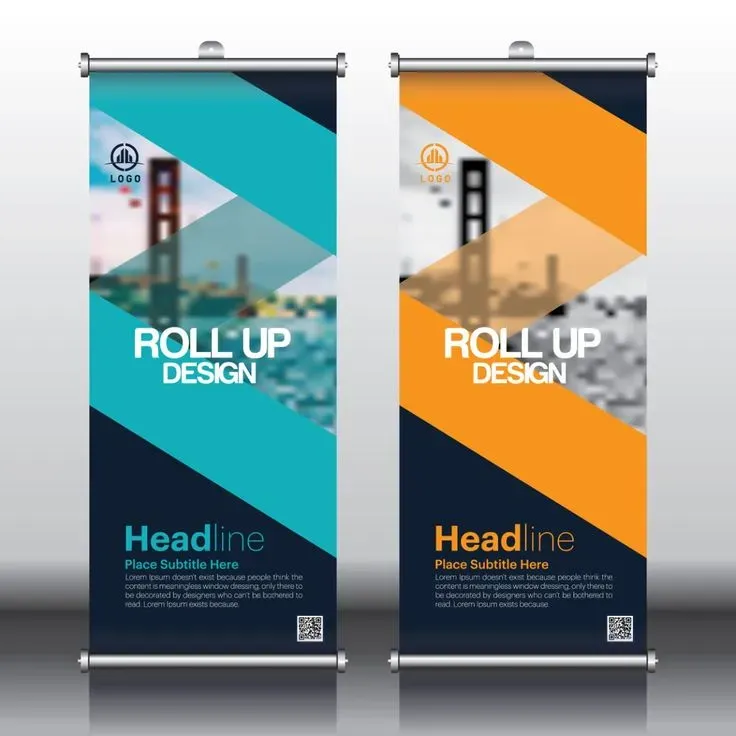
In today’s fast-paced marketing environment, designing impactful custom roll-up graphics is about more than aesthetics—it’s about instantly communicating your value, promise, and brand story to passing prospects. A well-crafted roll-up serves as a portable storytelling asset for trade show graphics, conference lobbies, and event marketing, guiding viewers toward your core message and desired action. In this introductory guide, we cover typography, color, and layout choices that help the eye flow from headline to call to action and back to your key message. Framing your visuals within your brand system and accommodating venue lighting ensures legibility, while a clear CTA nudges attendees toward a landing page, QR code, or contact form. By prioritizing clarity over clutter and validating designs with print-ready checks, you can create banners that stand out at events and reinforce a cohesive marketing strategy.
Designing Impactful Custom Roll-Up Graphics: Strategy, Layout, and Brand Cohesion
designing impactful custom roll-up graphics is about more than aesthetics; it’s about shaping a narrative that guides attendees toward your value proposition. When done well, the banner becomes a storytelling anchor—drawing in passersby, clarifying your offer, and inviting action. In practice, this begins with understanding your audience, venue, and the message you want to crystallize within seconds. This framing sits at the core of custom roll-up banner design, ensuring the layout, imagery, and typography align with your brand and event goals.
At a broader level, the strategy of roll-up graphics ties into your entire event marketing plan. By treating each banner as a modular asset, designers can extend the same messaging across multiple touchpoints—trade show graphics, lobby displays, and digital promos—while preserving consistency. The result is a cohesive experience that reinforces recognition and drives engagement, turning a simple banner into a high-impact component of your marketing mix.
Key Elements That Make Roll-Up Banner Design Stand Out
If you’re aiming for a standout roll-up, focus on the core elements that guide quick comprehension: a strong, benefit-driven headline; visuals that reinforce the message; and a CTA that’s easy to notice and act on. For practitioners, roll-up banner design tips often center on creating a visual hierarchy that mirrors how people scan a banner—from top to bottom and left to right.
Brand-aware visuals and clean typography are essential to designing roll-up banner graphics that read clearly from a distance. Place your logo so it’s visible but not overpowering, and use color and contrast to direct attention toward the key message and CTA. This approach also dovetails with the broader practice of custom roll-up banner design, ensuring every element works together rather than competing for attention.
Design Principles for Color, Typography, and Imagery in Roll-Up Graphics
Color theory plays a pivotal role in roll-up graphics: use your brand hues to reinforce identity while selecting contrasts that enhance legibility in exhibition lighting. Typography should favor clear, open letterforms, with a minimal duo of typefaces to reduce cognitive load. When you balance color, scale, and whitespace, you create a composition that feels intentional and easy to read—from two to three meters away.
Imagery should support the copy rather than overwhelm it. A clean composition with ample negative space helps the message breathe and reduces visual noise. Pair a bold hero image with succinct supporting copy, and maintain layout consistency through grid systems and alignment. These design principles—color, typography, and imagery—anchor high-impact marketing banners design and ensure your roll-ups perform under varied venue conditions.
From Brief to Print-Ready: The Design Process for Trade Show Graphics
A smooth process starts with a clear brief that defines the primary message, target audience, and environment. For trade show graphics, this means articulating the one-off value proposition you want attendees to remember within seconds. Translating that brief into a concept mockup helps you test visual hierarchy and eye travel, ensuring the viewer moves naturally from headline to imagery to CTA.
Next comes practical print preparation: confirm exact dimensions, bleed, safe margins, and resolution (typically 300 dpi). Ensure assets are vectorized where possible and fonts are embedded for reliable printing. The final deliverables—print-ready files and print instructions—should reflect brand standards and color profiles so that the live banner matches the design intent across production runs.
Contextual Tailoring: Trade Shows, Lobbies, and Events
Different environments call for adjusted emphasis. Trade shows benefit from a single, bold offer and a scannable CTA that can be absorbed in seconds amid a crowded hall. In lobbies or showroom spaces, you might weave a short story across multiple banners while staying legible and on-brand, using consistent typography and color to maintain a cohesive experience.
Even during shorter campaigns or seasonal activations, core design elements can be reused across banners by swapping imagery or headlines while preserving typography and color. This approach aligns with the broader practice of designing marketing collateral that scales across contexts—keeping the brand message intact while adapting the visuals to the venue and audience.
Practical Tips, Common Pitfalls, and Validation for Successful Roll-Up Campaigns
A core set of practical tips helps ensure your roll-up delivers results: keep text concise with a single benefit in the headline, limit visuals to avoid clutter, and ensure white space makes the message stand out. These guidelines map directly to roll-up banner design tips you’d implement during concept development and final reviews.
Validation is critical: perform a print test to check color fidelity, legibility at distance, and alignment. Accessibility matters too—confirm font sizes and contrast meet guidelines so the banner communicates clearly to a broad audience. By validating early and often, you maximize the effectiveness of your designing roll-up banner graphics and ensure the asset supports broader campaigns, including trade show graphics and high-impact marketing banners design.
Frequently Asked Questions
How can designing impactful custom roll-up graphics boost engagement at a trade show?
Designing impactful custom roll-up graphics focuses attention on a single, clear message using bold imagery, concise copy, and a strong CTA. Prioritize high contrast, legible typography, and branding consistency so the message is readable from distance and aligns with your broader marketing goals.
What are essential roll-up banner design tips for high-impact marketing banners design?
Follow roll-up banner design tips: choose a dominant headline, use one strong supporting image, limit to two complementary fonts, maintain safe margins, and export at 300 dpi. Include a simple URL or QR code to guide post-event engagement, all while staying true to your brand.
How does designing roll-up banner graphics ensure brand consistency across events?
Designing roll-up banner graphics should reuse a brand kit: consistent colors, typography, logo treatment, and layout grids. Use templates for multiple banners to keep typography, margins, and imagery cohesive, reinforcing recognition across trade show graphics and other displays.
What considerations should I make when designing impactful custom roll-up graphics for different contexts like trade shows and lobbies?
In trade shows, emphasize a single offer and a scannable CTA; in lobbies, you can tell a short story with longer copy. Always maintain legibility, choose context-appropriate imagery, and keep core branding intact to ensure cohesive event marketing.
What role do layout and typography play in designing roll-up banner graphics for quick scanning?
Layout and typography establish visual hierarchy: large, benefit-driven headlines; readable body text; ample negative space; two complementary typefaces; and alignment rules. This ensures the viewer can grasp the message within seconds, even from several meters away.
How do I prepare print-ready assets for custom roll-up banner design to ensure high quality?
For a print-ready result, confirm exact dimensions, bleed, and safe margins; export at 300 dpi; provide vector logos; embed fonts when needed; and deliver a print-ready PDF or printer-specific file. This aligns with the custom roll-up banner design workflow and minimizes revisions.
| Key Point | Summary |
|---|---|
| The Purpose and Power of Roll-Up Graphics | Roll-up banners provide visibility and portability, delivering a single, impactful message quickly. They’re reusable marketing assets tailored to brand, audience, and venue. |
| Core Elements of a High-Impact Roll-Up | Key elements include a strong headline, visuals that reinforce the message, high color contrast, clear typography (two fonts max), logo placement, and a minimal CTA to guide engagement. |
| Design Principles: Color, Typography, and Imagery | Use brand-aligned colors with high contrast for legibility. Choose bold but readable typography, clean imagery, and a consistent layout to reduce cognitive load. |
| The Design Process: From Brief to Print-Ready | Follow a structured workflow: clear brief, concept mockups, confirm print specs (dimensions, bleed, 300 dpi), ensure readability, and deliver print-ready files. |
| Tailoring for Different Contexts | Adapt messaging and visuals for trade shows, lobbies, and events while preserving brand identity and legibility. |
| Practical Tips and Common Pitfalls | Keep text concise, limit visuals, avoid clutter, ensure accessibility (contrast and font size), and perform a test print to verify color and readability. |
| Tools, Resources, and Real-World Examples | Leverage Canva for quick turnarounds or Illustrator/InDesign for precision. Use brand kits and editable templates for consistency. |
| Case Insights: What Makes a Roll-Up Stand Out | Successful banners focus on a bold hero image, concise headline, and a clear CTA that guides attendees to further engagement. |