
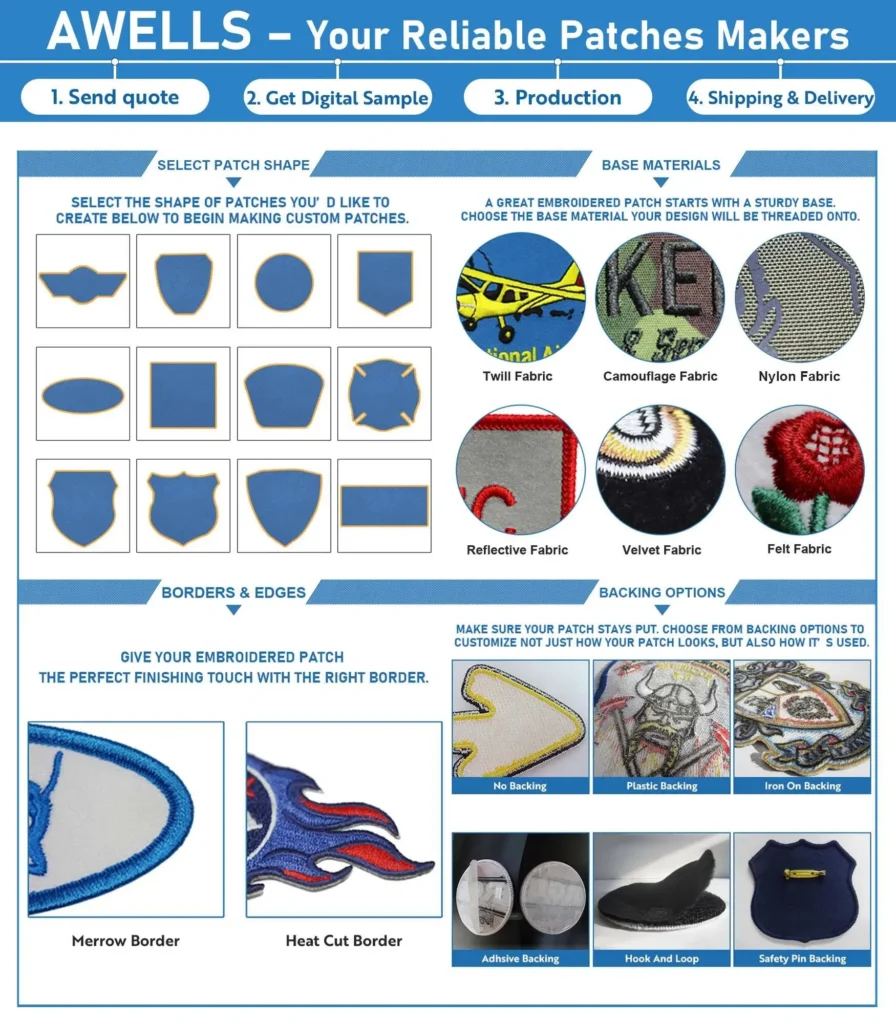
Patch styles comparison is a practical guide for brands, clubs, and organizations looking to translate a logo into a durable, eye-catching patch that can stand up to daily wear, seasonal promotion, and the needs of a multi-channel product strategy, from merchandise booths to online storefronts and team gear. Choosing among embroidery, chenille, and PVC patches influences not only the final look and tactile experience but also cost, lead times, and how well the patch holds up through washing, exposure to sun, and active use, which is why many teams, clubs, and retailers consider the lifecycle of each option before committing. As you explore the options, you’ll see how the traditional embroidery approach delivers crisp detail and a thread-based texture that reads clearly on a range of fabrics, while the plush chenille finish provides depth and a retro vibe that can convey heritage or premium positioning when used with bold logos. This overview also explains the practical implications of choosing specific backing methods, stabilizers, and border finishes, and it highlights how color management, embroidery thread density, and border style can influence durability, legibility, and attachment methods across everyday wear, performance gear, and fashion items. By the end, you’ll have a clearer sense of which style best matches your goals—whether you need a sleek sports badge, a luxury fashion accent, or a rugged outdoor emblem—while understanding the trade-offs between texture, thickness, care needs, and production efficiency.
Think of patch styling as a spectrum of badge design options rather than a single technique. The choice centers on how the image is created on fabric: embroidered stitches that build shape with thread, plush pile for a tactile finish, or molded PVC that yields bold silhouettes with durable edges. Each path has inherent strengths for different contexts—embroidered patches tend to read clearly at small sizes, rubber or PVC patches offer weather resistance, and chenille patches carry a nostalgic or premium feel. Beyond technique, the discussion covers backing methods, attachment choices, and finish options such as Merrow borders, heat seal, or iron-on options, all of which influence care and durability. When brands consider durability, value, and appearance over the product lifecycle, the terminology shifts from method to outcome: legibility, tactile experience, and branding consistency across garments and accessories. In practice, designers map the visual language of a logo to a patch family that harmonizes with textiles, garment types, and user scenarios—athletic uniforms, streetwear accents, corporate branding, or collectable club insignias.
Patch styles comparison: embroidery vs chenille vs PVC patches for brands
Understanding patch styles begins with the big question: how will the patch represent your logo while withstanding real-world wear? In this Patch styles comparison, we contrast embroidery patches vs chenille patches and PVC patches, outlining how texture, durability, and cost interact with your brand’s personality. This overview sets the stage for evaluating whether a sleek sports badge, a heritage badge, or a rugged outdoor emblem best fits your needs.
Across custom patch styles, you must consider fabric backing, edge finishing, and attachment method. Embroidery usually offers crisp detail and versatile backing options, chenille adds plush depth with a thicker profile, and PVC delivers tough, weather-ready durability. By mapping your garment types, laundering practices, and wash cycles, you can predict which style will satisfy customer expectations and budget constraints.
Embroidery patches: Classic texture, durability, and design fidelity
Embroidery patches use colored threads stitched into fabric backing, delivering crisp lettering and fine color transitions. The merrowed edge or heat-sealed border helps prevent fraying, while color range is driven by thread availability and dye lots. This classic texture makes embroidery patches versatile for military insignias, school logos, and fashion labels, and supports both sew-on and iron-on backing.
Embroidery patch durability shines in everyday wear; they withstand regular laundering with proper sealing. However, tiny text and gradients can be challenging, and thread fraying can occur if edges aren’t finished correctly. When evaluating embroidery in the patch styles comparison, consider backing stability, thread count, and the total cost for large runs.
Chenille patches: Plush texture, retro vibe, and design considerations
Chenille patches bring a plush, retro texture that stands out on apparel. Using two or three layers of yarns woven into a velvety surface, they create a depth and shine that is especially popular for varsity styles, club insignias, and nostalgic fashion motifs. The patch texture is distinct from embroidery and often reads as a tactile statement on jackets, hats, and sweaters.
Chenille pros and cons center on its luxurious feel versus practical constraints. The patches are thicker and heavier, which can affect garment fit and crease over time, and production costs tend to be higher due to stitching complexity. For designs with bold shapes and solid color blocks, chenille delivers a premium look, but tiny text or tight curves may require careful adjustments to maintain legibility.
PVC patches comparison: durability, color, and real-world performance
PVC patches comparison highlights a raised, molded design that sits above the backing, delivering exceptional durability and weather resistance. PVC is excellent at reproducing complex shapes and small text with crisp edges, and the material is highly resistant to fraying, color bleed, and impact from sunlight. This makes PVC patches ideal for outdoor teams, promotional campaigns, and rugged workwear.
In practice, PVC patches can carry a higher upfront cost per unit, and some applications may experience stiffness depending on patch thickness. Design constraints exist where extremely fine details might blur at very small sizes. When evaluating PVC in the patch styles comparison, consider long-term color consistency, edge finish, and how the patch will be attached to garments under active use.
Custom patch styles: backing, size, and color management decisions
Choosing backing types—sew-on, iron-on, or heat-seal—shapes installation, care, and reusability. Embroidery patches typically offer a broad range of backing options, while chenille patches require sturdy stabilization to keep edges from curling, and PVC patches rely on simple heat seals for quick attachment. Size matters too: embroidery patches excel at moderate to large sizes with maintained thread density, chenille patches suit bold, uncluttered designs, and PVC patches perform well at smaller sizes with precise edges.
Color management is another essential factor in custom patch styles. Embroidery depends on thread color accuracy and dye lot consistency, chenille can show slight pooling in yarns, and PVC relies on pigment formulation and production lot control. For a brand seeking consistent results across a catalog, PVC may provide the most uniform appearance, while embroidery offers classic fidelity and chenille provides a strong stylistic statement.
Practical guidance by use case: when to choose embroidery, chenille, or PVC
For uniforms and everyday wear where you expect frequent washing, embroidery patches offer reliable performance, crisp lettering, and flexible backing compatibility. If a retro or premium fashion statement is your aim, chenille patches can deliver a distinctive, tactile finish that distinguishes your product line in a crowded market.
For outdoor gear, sports teams, or rugged promotional items, PVC patches often deliver the longest life with the least color variation over time. In any scenario, a small pilot order or sample run helps compare how your logo translates across each patch style, allowing you to assess total cost of ownership, garment compatibility, and long-term durability before scaling production.
Frequently Asked Questions
What is patch styles comparison and why is it important when choosing between embroidery, chenille, and PVC patches?
Patch styles comparison is the framework used to evaluate embroidery patches vs chenille patches versus PVC patches by comparing texture, durability, cost, and production time. In this patch styles comparison, embroidery patches offer detailed thread work and versatile backings, chenille patches deliver a plush, retro texture, and PVC patches provide rugged, weather-resistant surfaces with crisp edges. This helps brands, clubs, and organizations match a logo to a garment type and life cycle.
How does embroidery patch durability compare to chenille patch durability?
Embroidery patch durability is strong for everyday wear and machine washing when properly sealed, though edge wear can occur if finishing is poor. Chenille patches are visually durable but thicker and more prone to lint buildup and wear in high-friction use. In general, embroidery patch durability tends to be reliable across many applications, while chenille offers a distinctive look with careful care.
What are the chenille patch pros and cons, and when are they a good fit?
Chenille patch pros include a plush, standout texture and bold visibility ideal for lettered logos and nostalgic or club designs. Cons include greater thickness, higher cost, and longer production times, with potential fit issues on slimmer garments. Chenille is a good fit when you want a premium, tactile look for varsity, club insignias, or retro fashion motifs.
In patch styles comparison, how do PVC patches compare to embroidery and chenille in terms of weather resistance and color stability?
PVC patches offer excellent weather resistance and color stability with minimal edge fraying, making them ideal for outdoor use and active wear. Embroidery provides classic fidelity with strong color range but can require careful thread matching and finishing. Chenille adds texture and depth but may have slight color variation due to yarn pooling. Overall, PVC patches excel in durability and uniform color across harsh conditions.
What should brands consider under custom patch styles when planning cost, lead time, and production?
Under custom patch styles, consider backing type, patch size, color management, and production lead times. Embroidery patches typically offer good value for moderate runs with scalable pricing, chenille patches cost more and take longer due to stitching complexity, and PVC patches often have higher upfront costs but offer superior durability and quick production for rugged use.
If evaluating embroidery patches vs chenille patches or PVC patches, what factors should drive the decision for your logo?
Let your logo, garment lifecycle, and use environment drive the decision. For fine detail and versatility, choose embroidery patches; for bold, plush texture and heritage branding, choose chenille patches; for rugged outdoor or high-wabric durability with bright, uniform color, choose PVC patches. Also weigh budget, lead time, and how the patch will be worn and cared for.
| Category | Embroidery | Chenille | PVC |
|---|---|---|---|
| Texture / Look | Traditional thread-based with detailed line work; fabric backing; border options such as merrowed, overlocked, or heat sealed. | Plush pile with two or three yarn layers; velvety, retro vibe; thicker and heavier; depth and shine. | Raised molded design from colored PVC; durable, weather-resistant; crisp edges and color; uniform finish. |
| Backing / Attachment | Sew-on or iron-on backing common; various backings; border finish options. | Requires robust stabilization to prevent edge curling; backings more elaborate. | Heat seal adhesive; simple attachment; often not sew-on. |
| Pros | Sharp lettering, broad color range, versatile backing; scales well across product lines. | Strong visibility from distance; tactile, nostalgic; bold shapes. | Weather and abrasion resistance; color consistency; complex shapes and small text possible. |
| Cons | Edge fraying risk if not finished; limits on extremely small text; color matching across threads needed. | Thicker; can affect garment fit; higher costs; challenges with small letters or tight curves. | Higher upfront cost for large runs; potential stiffness; fine details may blur at very small sizes. |
| Durability / Care | Durable for everyday wear; withstands washing; risk of edge wear if not sealed properly. | Very durable but may collect lint; care with gentle washing and air dry. | Extremely rugged; water and heat resistance; machine washable with minimal impact. |
| Size Considerations | Best at moderate to large sizes for density; embroidery scales well. | Best for bold, uncluttered designs; small text may lose clarity; large shapes. | Excellent at smaller sizes with complex shapes; precise edges and color. |
| Cost & Lead Time | Typically best value for moderate runs; shorter lead times; scalable pricing. | Generally higher cost and longer lead times due to complexity. | Highest upfront cost per unit; can reduce replacement costs over time; longer lead times for high volume. |
| Color Management | Thread color matching critical; dye lot variation possible. | Yarn color pools; slight shifts possible; robust color with embroidered look. | Color consistent due to pigment formulation; production lot control important. |
Summary
Conclusion: Patch styles comparison shows that embroidery, chenille, and PVC patches each offer distinct textures, durability profiles, and production considerations, making the best choice dependent on the brand’s goals and garment use. In practice, brands typically select embroidery for classic fidelity and versatility, chenille for a nostalgic or premium tactile effect, and PVC for rugged, outdoor-ready durability and clean edges. When choosing among patch styles, consider texture, weight, size, color management, backing options, and lead times to align the patch with the intended use, garment lifecycle, and budget. For a clear decision, request samples, compare how each patch style translates your logo across sizes, and pilot a small order to validate appearance and performance across real-world conditions.